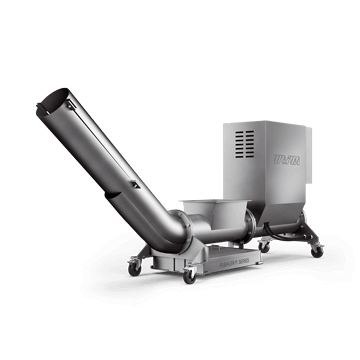
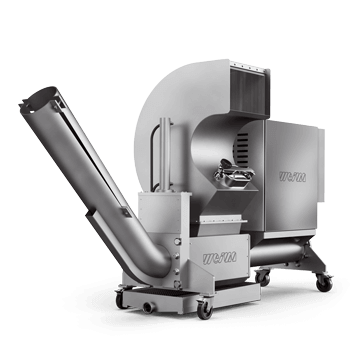
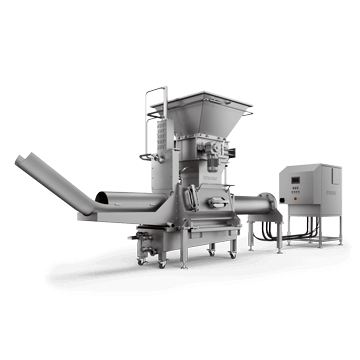
WEIMA G.200 Presses | De-watering packaging

  • Automatic mode
  • Post-cleaning system
  • Multi-shift operation
  • stainless steel version
  • Level detection
  • 200 mm pressed blocks

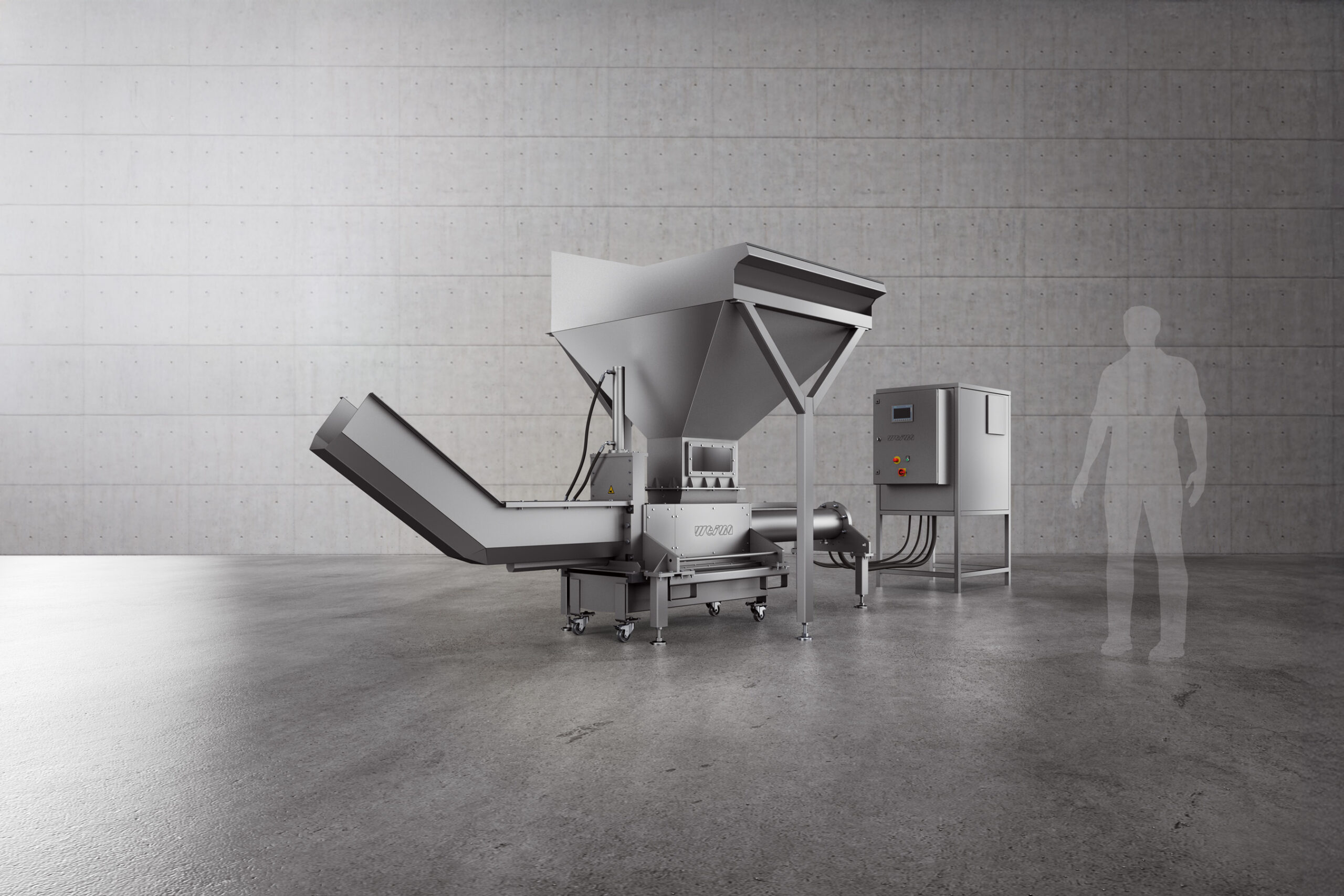
The WEIMA G.200 is a high-performance dewatering press designed for the professional processing of food, beverage and cleaning product packaging, as well as a wide variety of containers. As a modern, high-performance solution, it combines efficient liquid separation with reliable material compaction – ensuring maximum volume reduction and optimal recyclability.

With a throughput of up to 6 m³ per hour and a compression rate of up to 99%, the G.200 produces compact bales with a diameter of 200 mm. The residual moisture content ranges between 3 and 30 per cent, depending on the input material. The result is manageable, transport-optimised bales that are ideally suited for downstream recycling and recovery processes.

Whether in retail, food production or waste management and recycling facilities: the WEIMA G.200 enhances the cost-effectiveness of your waste management logistics, reduces disposal costs and lays the foundation for a clean, efficient circular economy.
G.200
Product features

Due to increased discharge and customisable discharge length

The length of the discharge chute can be extended individually up to five metres. Unlike a screw press, the WEIMA press’s higher discharge point means that no conveyor belt is required for unloading into a container or tipping skip. This allows the press to be positioned optimally to suit your space requirements.
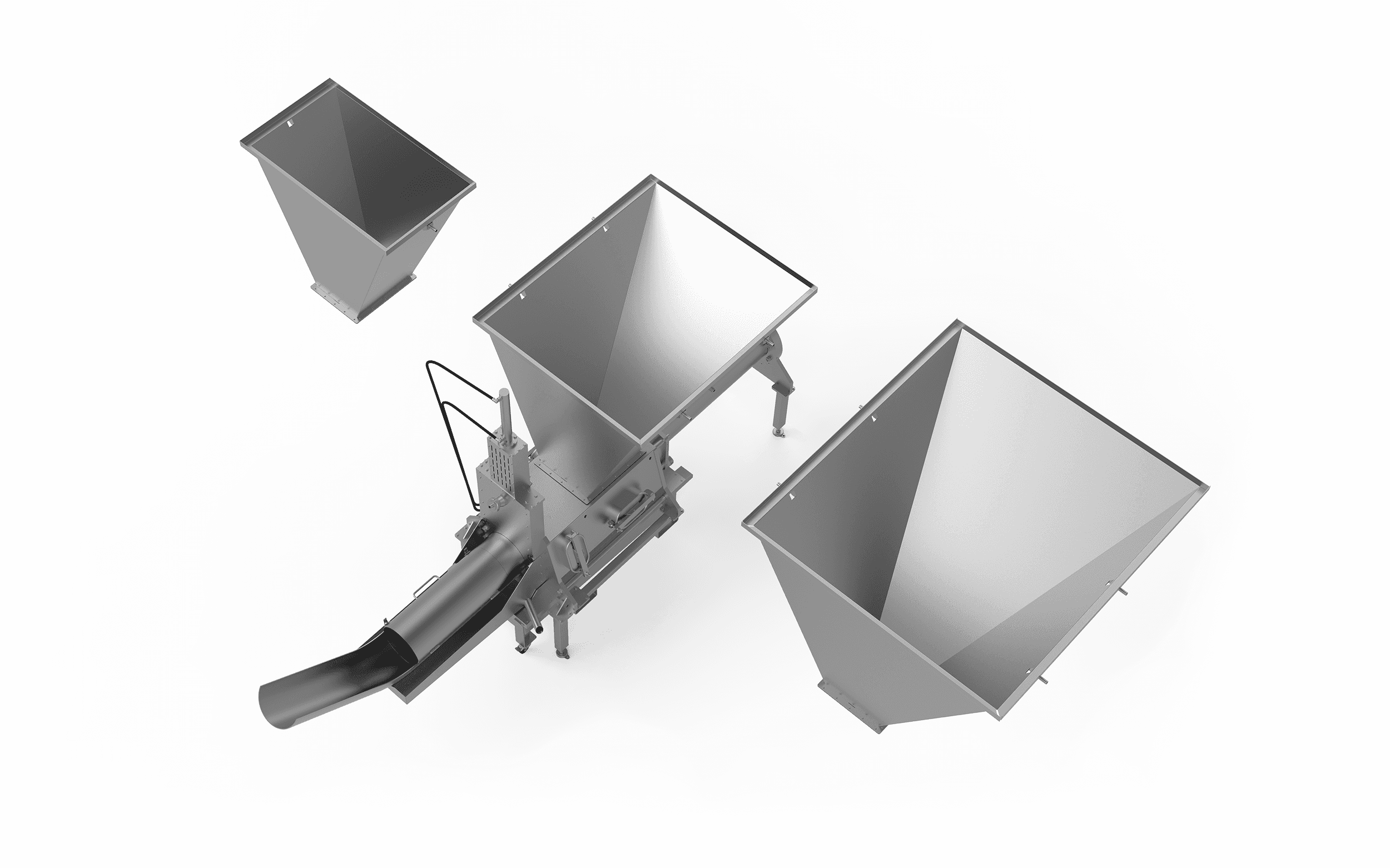
Hoppers for every application

You can choose from a range of hopper capacities: 220 l, 600 l, 800 l, 1,200 l or 2,000 l. In addition, a manual or automatic hopper lid can be fitted to ensure safety and hygiene.

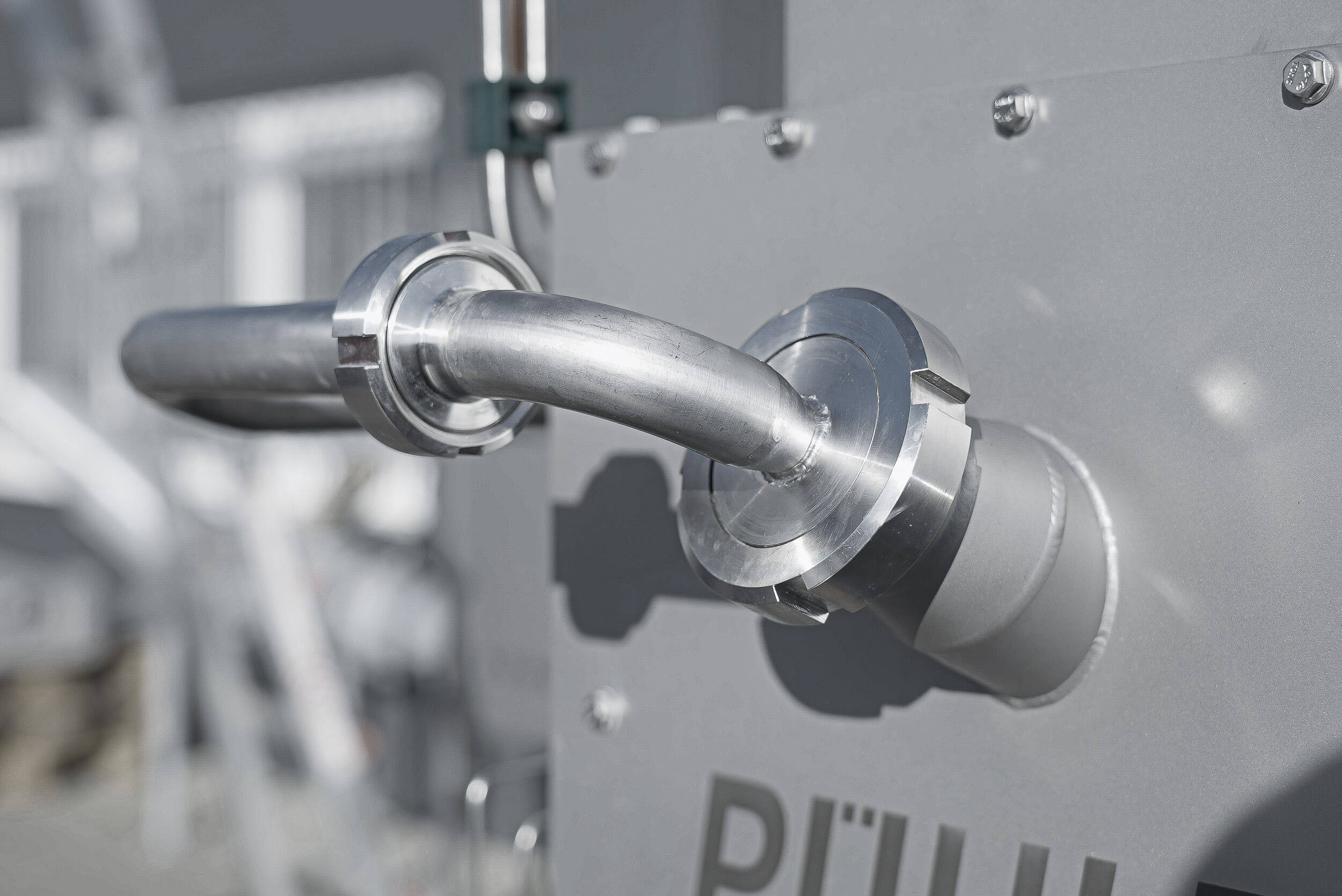
Welding seam according to hygienic design

Perfectly hygienic thanks to the optional hygienic design

Safe and hygienic. Thanks to their easy-to-clean design, WEIMA dewatering presses ensure food safety, meet hygiene standards and simplify cleaning procedures. This helps to minimise downtime.

Made possible by hydraulic oil cooling

It can be used without any problems in automated multi-shift operation. Thanks to oil cooling via a heat exchanger, the hydraulic oil can be kept at a constant operating temperature without overheating.

User-friendly touchscreen for quick parameter changes and diagnostics

Parameters such as pressing force and time, or the re-pressing function, can be set intuitively via the Siemens control system with touch display. Precise diagnostic messages ensure minimal downtime. Furthermore, full integration into the PROFINET system is possible. This allows upstream and downstream systems, such as conveyor belts or a lifting and tilting station, to be controlled in a user-friendly manner.
For maximum durability

To ensure the G Series remains in service for many years, we use high-quality stainless steel. This protects the machine body and control cabinet from wear and corrosion, whilst also being low-maintenance and hygienic.

Automated liquid drainage thanks to liquid level detection in the sump

If required, the removal of liquids can be automated using level sensors in the product collection tray. The Liquiphants control the pumping out of the extruded material and automatically shut down the recycling press if downstream processes are at a standstill. We use screw pumps for the removal of paste-like liquids and centrifugal pumps for liquid materials.
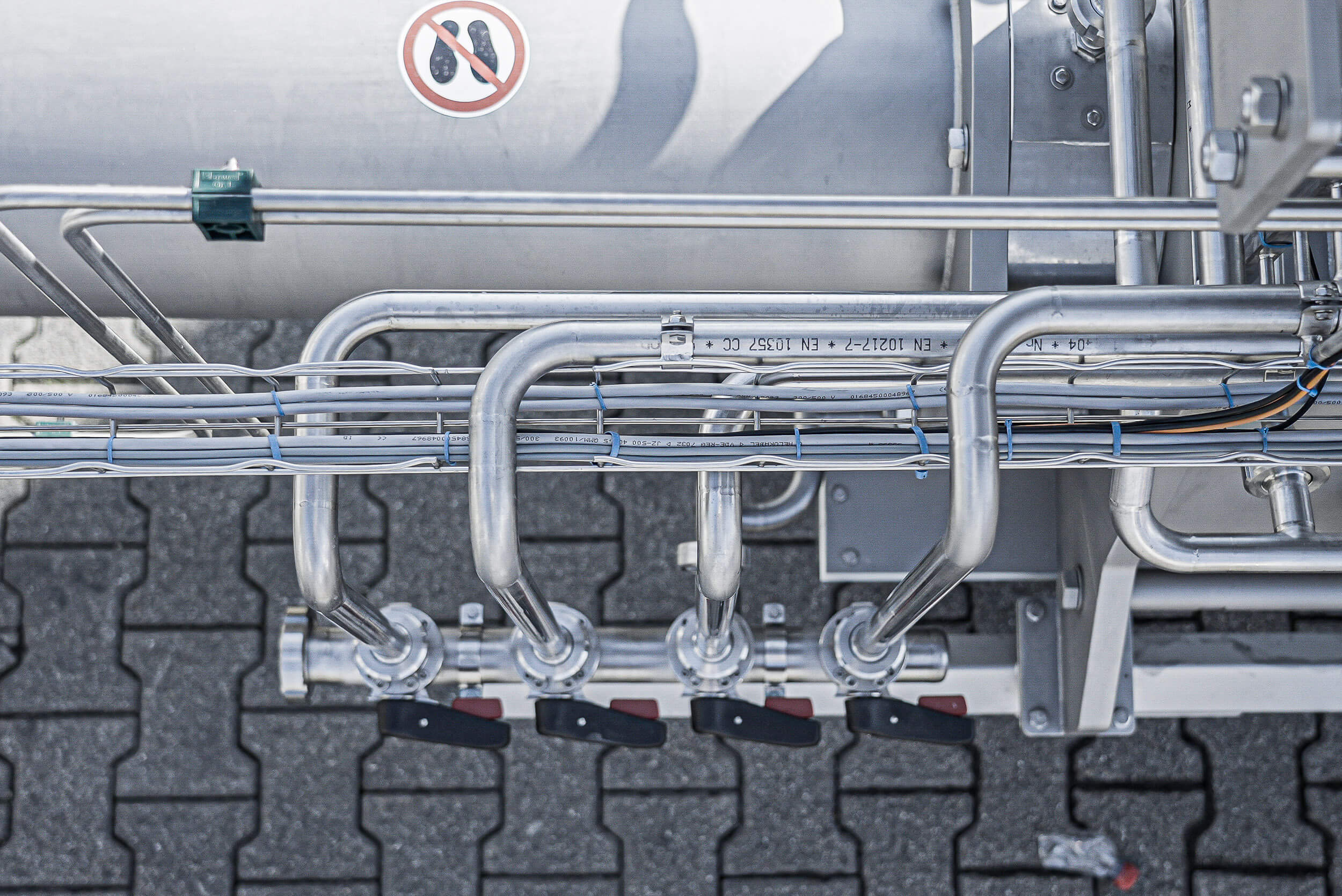
Clean pellets thanks to the post-cleaning system

To rinse any remaining product residue (e.g. yoghurt) off the moulded parts, a post-cleaning device in the form of spray nozzles can be fitted to the discharge pipe. The cooling water from the oil cooling system can be used for this purpose.
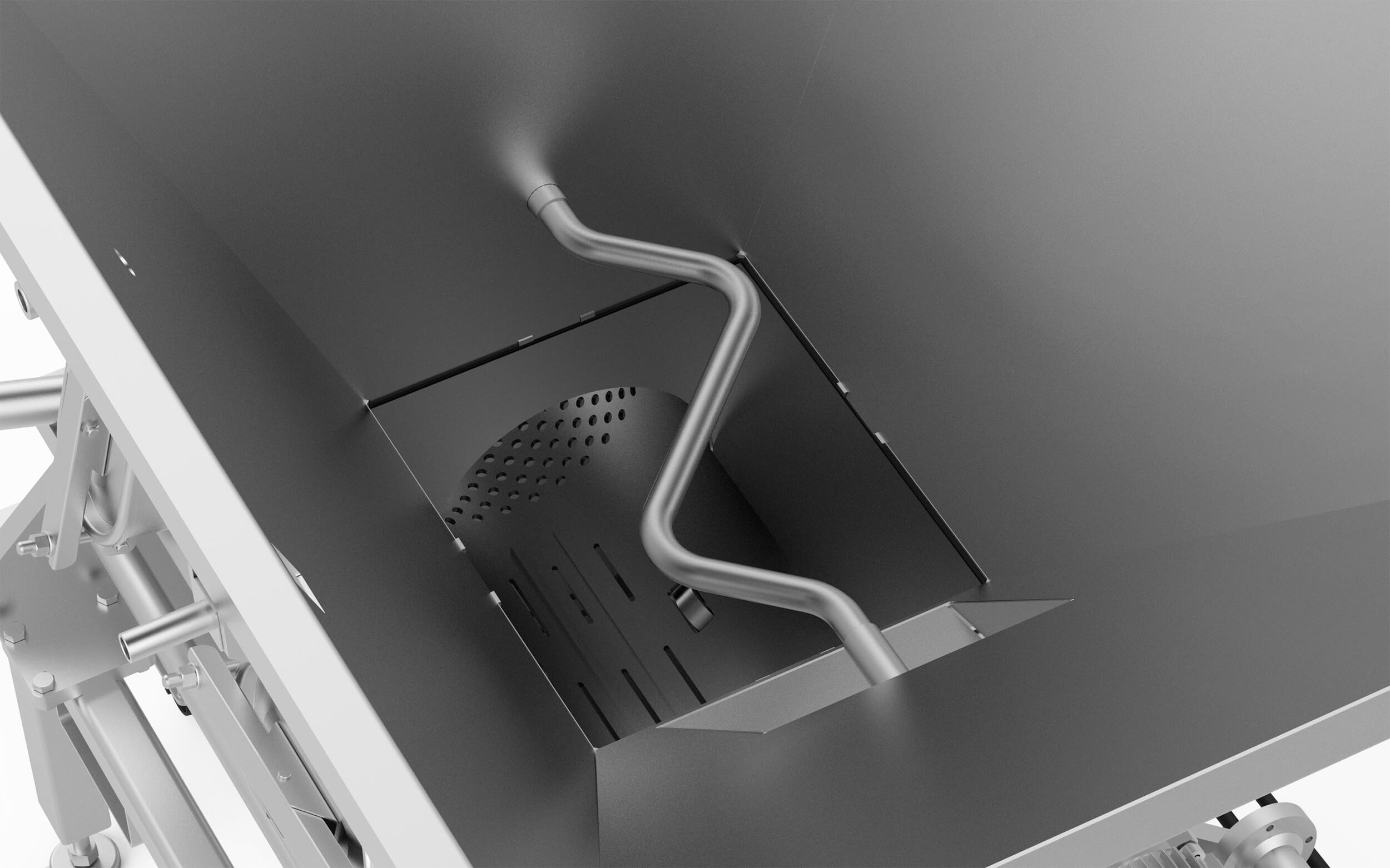
Thanks to the horizontal agitator

A horizontal agitator can be fitted to the feed hopper as an option. The continuous agitation of the material prevents bridging in the hopper, thereby ensuring a constant feed of material.
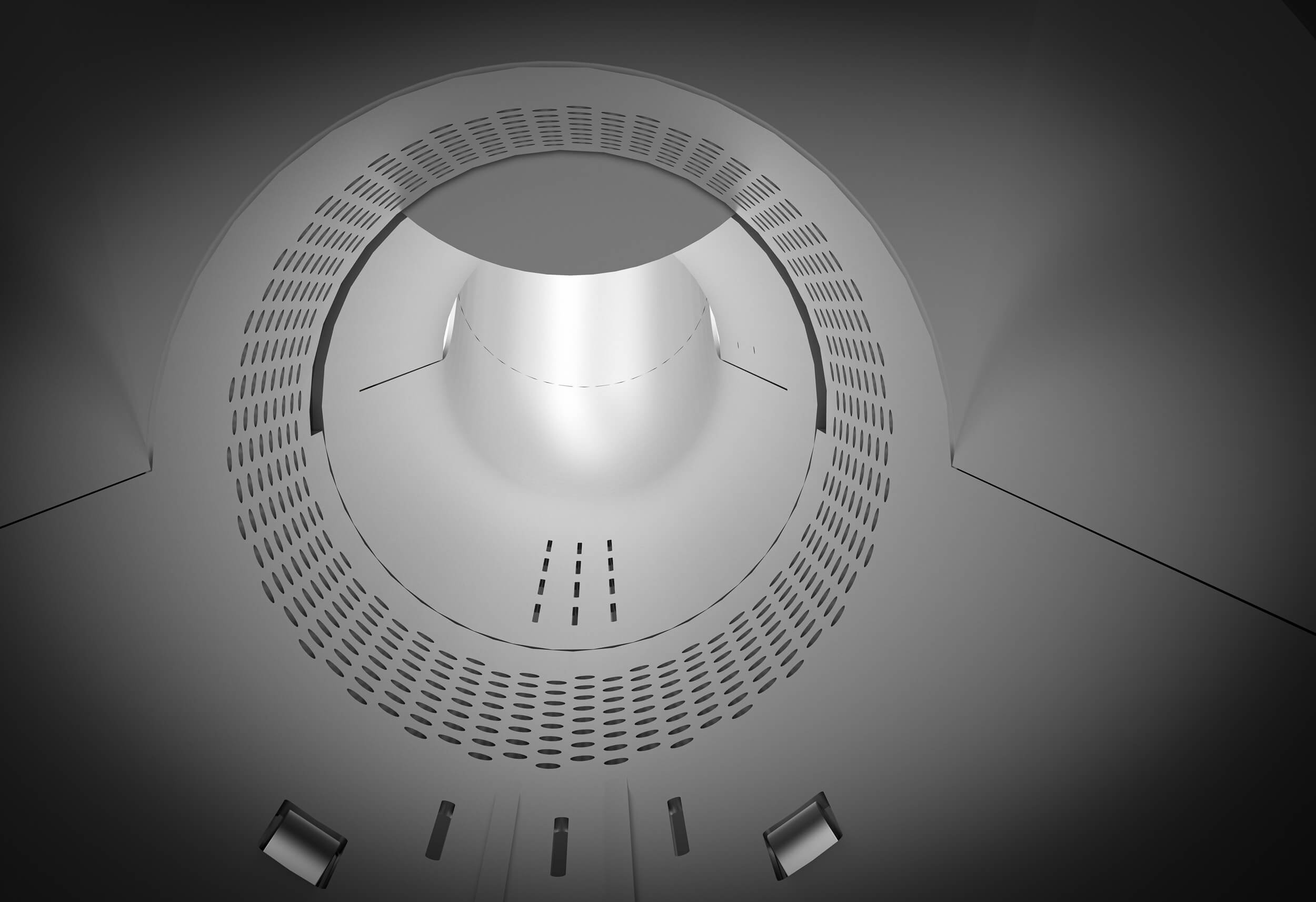
Custom mesh sizes for all types of packaging

The walls of the pressing chamber are perforated to allow the drained liquid to flow out. The screen aperture size can be individually adjusted to suit the properties of your material. For paste-like materials such as yoghurt or quark, round holes up to 12 mm in diameter are generally used. For liquids, however, screen apertures as small as 4 mm are possible. In any case, it is important that small packaging fragments do not end up in the collection tray along with the liquid.

Automated operation on your production line

To enable the press to operate fully automatically, the feed hopper can be fitted with a level sensor. This allows upstream systems (conveyor belt) to be stopped or started automatically as soon as the hopper reaches its maximum capacity. A continuous flow of material prevents the hopper from becoming overfilled.
G.200Product features
Welding seam according to hygienic design
portrait of Christian Zirnig
We’d be happy to advise you.

Do you have any further questions about the G.200 press or about drainage?

Kontakt

Technical data

Measurements & Comparison
CLOSE
  • Output diameter (mm)
  • Throughput rate
  • Performance
  • Residual moisture
G.200
  • 200 mm
  • up to 6 m³/h
  • 5,5 kW | 400 V | 50 Hz
  • 3 - 30 %
  • 200
  • up to 40T Fl./h
  • 3 kW | 400 V | 50 Hz
  • 30 %
  • 250
  • up to 60T Fl./h
  • 4 kW | 400 V | 50 Hz
  • 30 %
  • 300
  • ab 60T Fl./h
  • 4 kW | 400 V | 50 Hz
  • 30 %
  • 200
  • up to 2 m³/h
  • 4 kW | 400 V | 50 Hz
  • 3 %
WEIMA PUEHLER E.200 press
  • 200 mm
  • up to 2,5 m³/h
  • 4 kW | 400 V | 50 Hz
  • 3 - 30 %
WEIMA PUEHLER E.200 press
  • 300 mm
  • up to 4 m³/h
  • 5,5 kW | 400 V | 50 Hz
  • 3 - 30 %
  • 300
  • up to 12 m³/h
  • 7,5 kW | 400 V | 50 Hz
  • 3 - 30 %
  • 300
  • up to 22 m³/h
  • 15 kW | 400 V | 50 Hz
  • 3-30 %
PUEHLER G.300 ReWork
  • 300 mm
  • up to 10 m³/h
  • 7,5 kW | 400 V | 50 Hz
  • 3 - 30 %

Application videos

The G Series dewatering presses are suitable for a wide range of applications.
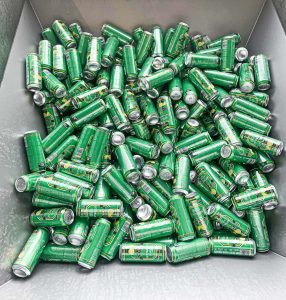
green oettinger beer cans in a container
beer tins
Draining beer cans at the OeTTINGER brewery using the WEIMA G.200 recycling baler
At the long-established Bavarian brewery OeTTINGER, WEIMA balers are used at several sites to efficiently dewater and compact waste materials. The WEIMA G.200 recycling baler empties used beer cans and processes them into a compact form in a single step. The enormous production volumes present a particular challenge. The G.200 is designed for high throughput and ensures that liquids are reliably separated and the remaining materials are reduced in volume. In this way, the system supports sustainable processes in beverage production – economically, powerfully and with a proven track record.
Visit YouTube
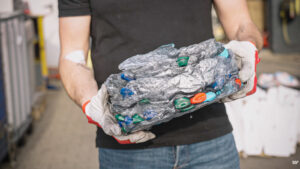
Crushed and compressed cans in a bin.
beer tins
New Belgium Brewing: De-watering and compacting beer cans with the WEIMA G.200
The US-based brewery New Belgium Brewing relies on a WEIMA G.200 dewatering press to efficiently open, empty and compact both full and empty beer cans. The machine processes the cans into compact bales with a diameter of 200 mm, which can then be optimally processed for recycling. By reliably separating liquid from aluminium, the G.200 significantly reduces volume and facilitates the return of valuable raw materials to the recycling cycle. A high-performance solution for sustainable processes, even in smaller breweries.
Visit YouTube
PET bottles
Dehydrate and compact PET water bottles using the WEIMA G.300 press
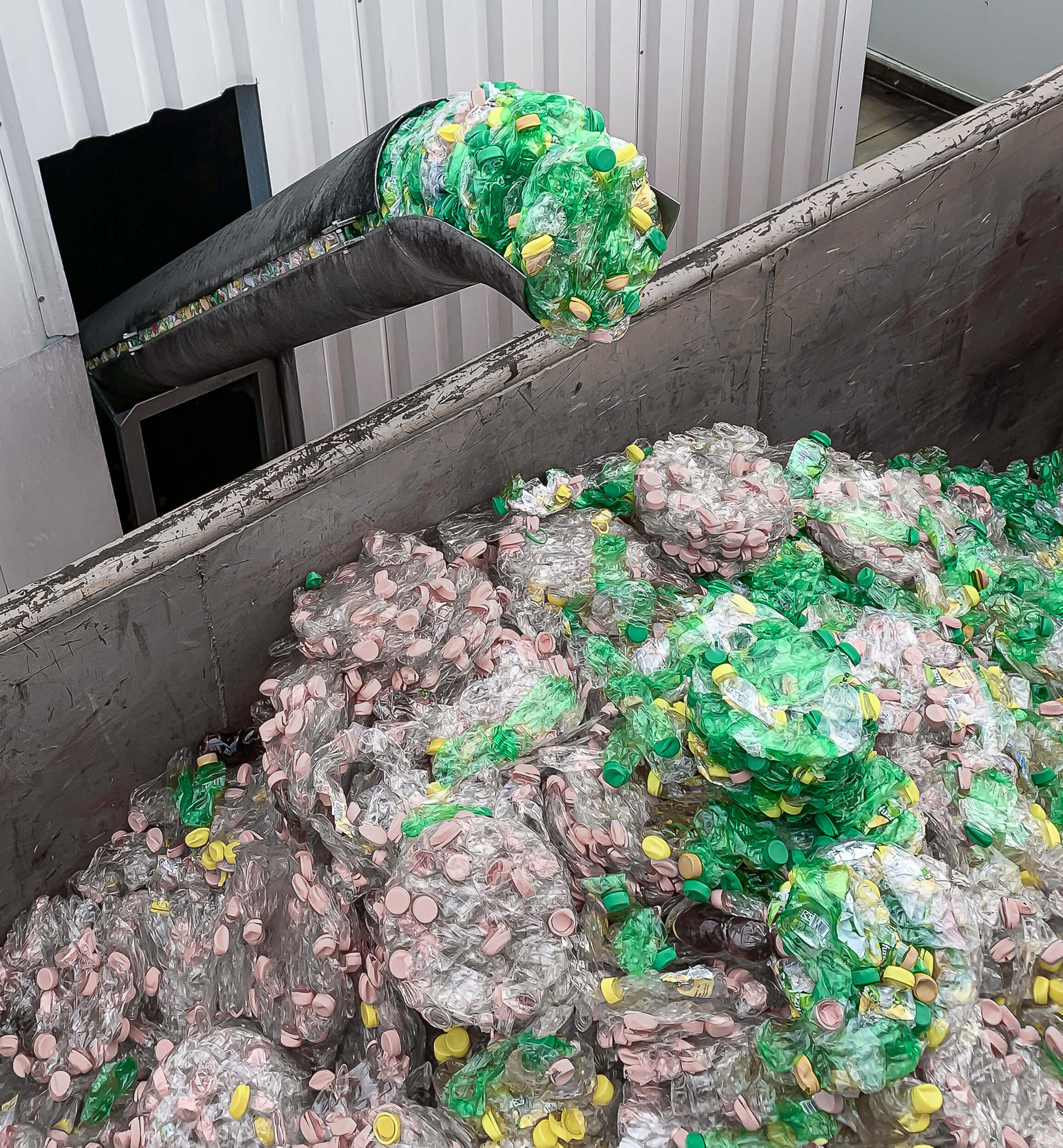
The WEIMA G.300 dewatering press efficiently opens, empties and compacts plastic water bottles made of PET. The machine reliably separates the liquid from the packaging material and significantly reduces the volume of the bottles. The compact compression process produces dimensionally stable bales, which greatly facilitate transport and further processing. The separated PET material can then be sent for recycling – ensuring the economical and sustainable processing of plastic packaging.
Visit YouTube
aluminium cans
Drainage and compaction of aluminium beverage cans at the Karlsberg Brewery
At the Karlsberg Brewery, a WEIMA G.200 dewatering press efficiently processes production waste from the can line. It handles various types of aluminium beverage cans, predominantly beer cans, which are rejected from the production process due to overfilling or underfilling, for example. The G.200 opens the filled cans, reliably separates the liquid from the aluminium and compacts the material into compact bales. This significantly reduces volume and weight, lowers disposal and transport costs, and optimally prepares the aluminium for the recycling process. A high-performance solution for sustainable material flow management in the brewing industry.
Visit YouTube
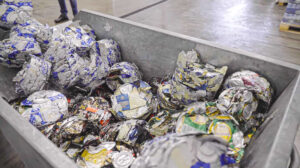
Pressed milk cartons in production at Emmi in Switzerland
milk cartons
WEIMA G.300 ReWork: De-watering and compacting beverage cartons (milk cartons) at Emmi (Switzerland)
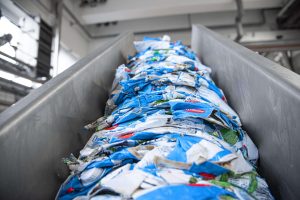
At Emmi in Switzerland, the WEIMA G.300 ReWork dewatering press is used to process defective or non-compliant milk drink cartons. The machine opens the packaged products, reliably separates the liquid contents from the composite material and compacts the packaging in a single, efficient process step. Thanks to the clean separation of materials, the carton packaging is optimally prepared for recycling, whilst the contents are treated separately. The G.300 ReWork thus provides an economical and sustainable solution for handling production waste in the food industry.
Visit YouTube
Plastic packaging
Draining and recycling ketchup and mayonnaise bottles | WEIMA G.200
The WEIMA G.200 dewatering press efficiently opens, empties and compacts full plastic bottles of ketchup and mayonnaise. The machine reliably separates the contents from the packaging and processes the plastic bottles into compact bales. Whilst the organic contents are disposed of properly, the separated plastic can then be sent for recycling. This allows defective batches, returns or surplus stock to be economically recycled and material streams to be cleanly separated from one another. The G.200 thus offers a high-performance solution for the sustainable processing of packaged foodstuffs.
Visit YouTube
Fine plastic particles
Pressing of fine particles from washed agricultural films | WEIMA G.300 dewatering machine
The WEIMA G.300 handles the compaction of fine particles generated in the washing line for agricultural films. The washed material – consisting of small plastic particles and residual moisture – is reliably dewatered and processed into compact bales. By reducing the moisture content and volume, the material is optimally prepared for further processing or recycling. The G.300 thus ensures efficient processes within film processing and supports the cost-effective return of plastic recyclates to the recycling loop.
Visit YouTube
Aluminium recycling
Draining and compacting aluminium cans at Custom Recycling | WEIMA G.200
At the metal recycling company Custom Recycling, the WEIMA G.200 recycling baler is used for the efficient processing of used beverage cans. Unlike in bottling plants, this is not production waste, but rather material collected from the recycling stream that is being prepared for recycling. The G.200 reliably opens and de-waters the aluminium cans and then compacts them into compact bales. Separating residual liquids from the metal improves the quality of the recycled material and optimises further processing in the smelting process. The result: reduced transport volumes, clean material flows and the cost-effective return of aluminium to the raw material cycle.
Visit YouTube
tins
Drain and compact tins of olives | WEIMA G.300
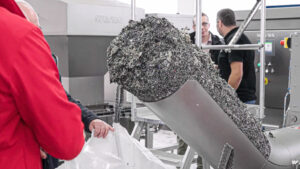
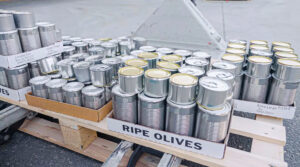
The WEIMA G.300 dewatering press demonstrates its capabilities when processing tins of olives. The filled food tins are opened, emptied and then efficiently compacted. Liquids and food residues are reliably drained into a collection tray below, whilst the metal packaging is processed into compact bales. This results in a clean separation of contents and packaging, the volume is significantly reduced and the material is optimally prepared for subsequent recycling.
Visit YouTube
0 / 0
We’d be happy to advise you.

Do you have any further questions about the G.200 press or about drainage?

Special offer
Arrange a free material trial today.
Free material trial